IELTS Speaking Part 2: How to Describe a Place You Know Well
Describing a place is one of the most common Part 2 topics. Learn a simple structure for it, with a real cue card and a full two-minute sample answer.
In this article
Describing a place is one of the most common topics in IELTS Speaking Part 2. The cue card might ask about a park, a cafe, a library, a beach, or a place in your town you like to visit. Many candidates struggle here because they describe the place in one or two sentences and then run out of things to say. The answer is not to memorise descriptions of places. It is to use a simple structure — what the place is, where it is, what you do there, and why you like it — and to fill each part with one or two details. This post shows you that structure, with a real cue card and a full two-minute sample answer.
What does the cue card ask for?
Here is a real-style cue card: “Describe a place in your town that you like to visit. You should say: where this place is, what it looks like, what you do there, and explain why you like to visit it.” The card has four points, and your answer must cover all four. The first point is the location: name the place and say where it is. The second is the description: what it looks like, what sounds and smells you notice. The third is the activity: what you actually do there. The fourth is the reason: why you like it, and how it makes you feel. Many candidates spend too long on the description and forget the reason, which is the point that shows the examiner you can give opinions. Give each point about 30 seconds, and you will fill the two minutes.
How do you plan in one minute?
You have one minute to prepare, and you should use it to write notes, not full sentences. Write one key word for each point on the card. For the cue card above, your notes might be: “Riverside Park — ten minutes from my house, by the river. Trees, benches, ducks, quiet in the morning. Walk, read, meet friends. Peaceful, helps me think.” That is enough. Do not write sentences, because you will read them instead of speaking naturally, and you will run out of time. Do not plan every detail — plan the four points and one example for each, then speak freely. If you cannot think of a detail for one point, use a memory: the first time you went there, or something that happened there once. A short memory fills 20 seconds and sounds natural.
What does a full two-minute answer sound like?
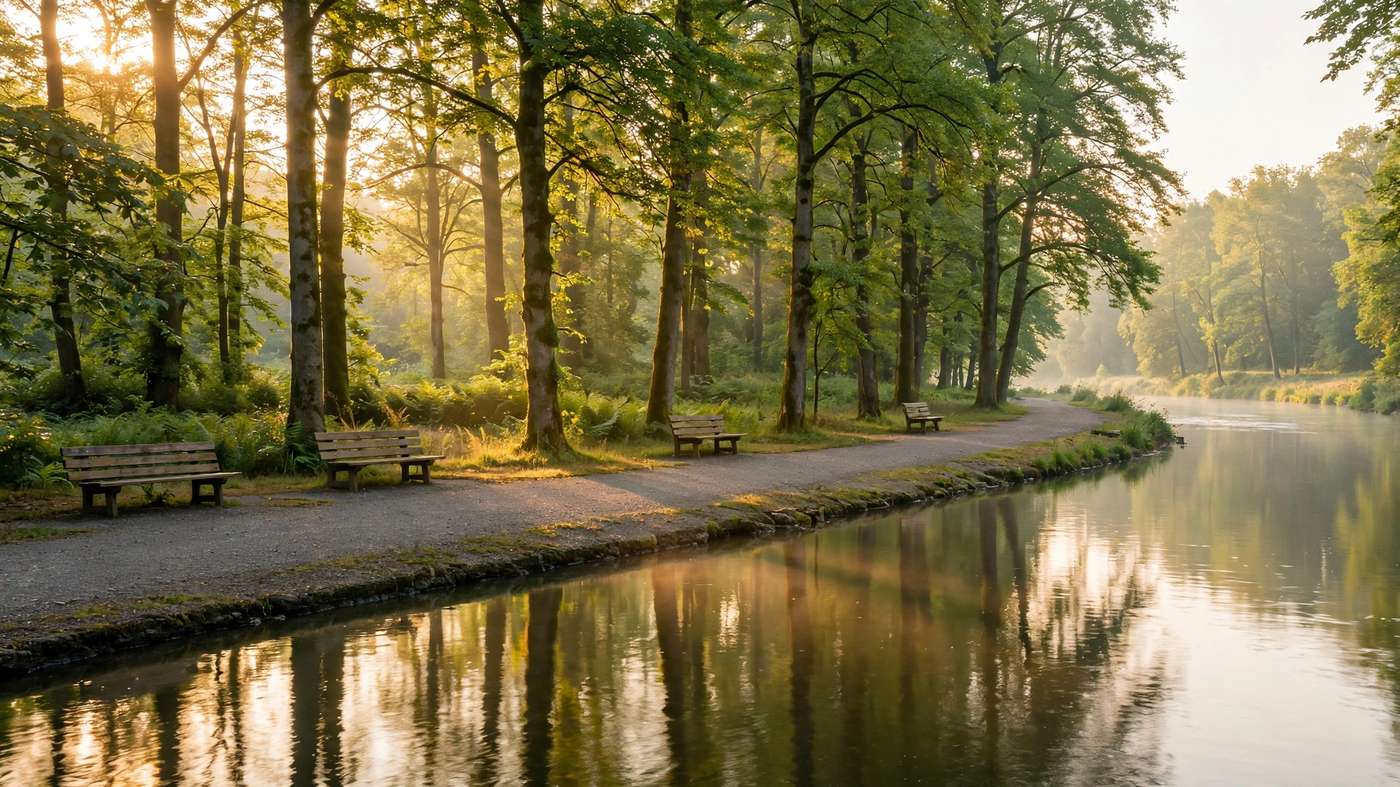
Here is a complete original sample answer for the cue card above, about two minutes long when spoken. “I would like to talk about Riverside Park, which is about ten minutes from my house, next to the river. It is a large park with tall trees, wide paths, and wooden benches facing the water, and in the morning it is very quiet. I usually go there on Saturday mornings. I walk along the river for half an hour, then I sit on a bench and read a book for a while. Sometimes I meet a friend there, and we talk while we walk slowly around the park. I like visiting this park because it helps me relax after a busy week. The sound of the water and the fresh air clear my head, and I always feel calmer when I leave than when I arrived. I also like it because it is free and open to everyone, so I never need to plan ahead — I can just walk there whenever I want some quiet time.” Notice the structure: location, description, activity, reason, in that order. Notice the details: ten minutes, Saturday mornings, half an hour, wooden benches. And notice the feeling words at the end: relax, calmer, quiet time. Those details and feelings are what make the answer sound real.
What mistakes should you avoid?
The first mistake is describing the place and forgetting to say why you like it. The reason is worth as much as the description, so save 30 seconds for it. The second mistake is listing facts without feelings: “It has trees. It has benches. It has a river.” Add one feeling or memory to each fact, and the answer comes alive. The third mistake is choosing a famous place you have never visited. Describe a place you know well, even if it is small and ordinary — a park, a cafe, a corner of your library. A real place you know gives you real details, and real details are what the examiner rewards. The fourth mistake is stopping after 60 seconds. If you finish early, add one more detail: what the place looks like in a different season, or what you did there last time. At XerciseUp, you can practise Part 2 with free mock tests that use real exam timing, so two minutes stops feeling long.
Can I describe a place I have only visited once?
Yes, if you remember it well. A place you know well is easier, but a strong memory works too.
What if I run out of things to say?
Add a memory or a feeling, or describe the place in a different season. One detail fills 20 seconds.
Should I describe a famous place?
Only if you know it well. An ordinary place you know beats a famous place you have never seen.
How long should each point take?
About 30 seconds per point. Four points at 30 seconds each fills the two minutes.
XerciseUp Team
The XerciseUp team writes practical IELTS and study abroad guides, based on what we teach in our classes and see in student essays every week.